
Tag Archives: mental-health

Navigating Business Challenges: Insights from Sailing

Some experiences can be simulated.

Sailing cannot, and it ever changes.

At first glance, a sailboat feels like leisure, wind, sea, and escape from reality. But the moment you take responsibility on board, that illusion disappears.

A sailboat is not an escape from life. It is a lifestyle full of responsibilities.

As we enter the sailing season, I wanted to take a few notes on how sailing aligns with the business life we live every day.

A Boat Is an Organization

A sailboat is, in essence, a fully functioning micro-organization.

  • The wind represents external market forces, unpredictable, uncontrollable, yet decisive.
  • The route is your strategy, chosen deliberately, but constantly under pressure to adapt.
  • The crew is your organization, each role critical, each mistake amplified.
  • The captain embodies leadership, not authority, but responsibility.

Unlike corporate environments, where feedback loops are often delayed or diluted, sailing delivers immediate and unambiguous consequences. A poor decision is not debated; it is felt. Instantly, no regrets, only lessons learned.

Reality Has No Buffer

At sea, there is no delay.
In most environments, reality is delayed through reports, meetings, and layers of interpretation. At sea, there is no such delay. If you are wrong, the boat tells you immediately. If communication fails, the system breaks immediately. There are no explanations, only outcomes.

If you’re wrong, the boat tells you immediately. If communication fails, the system breaks immediately.

No explanations. Just outcomes.

Leadership Is Behavior

On land, leadership can hide behind structure. At sea, it can’t. I sometimes say me, myself, and I, even though I have a crew with me.

I often just smile and don’t say anything.

There are no layers, no escalation paths, no time to reframe the narrative. Sometimes, the best and life-saving advice is to gear up with your life jacket if you haven’t already.

Only:

  • What you see and its relevance to your experience.
  • What you decide. There’s no right or wrong at sea. What you decide is what you’ll have to face.
  • What you communicate. There are a lot of assumptions; avoid them. Be clear and concise.

Teamwork Is Binary

Collaboration is not a “nice to have”; it either works or it doesn’t.

A maneuver with:

  • Slight hesitation
  • Unclear communication
  • Assumptions instead of alignment

will have consequences.

Nothing else can be more harmful than a precise decision.

Adapt or Stall

Plans don’t survive contact with reality. Wind shifts. Conditions change severely. You don’t debate it.

You adapt conditions continuously.

The Hidden Lesson

After a few hours, something shifts in people.

Less talking.

More observing.

Clearer communication.

Because reality leaves no room for ego.

Why It Matters

Sailing compresses how real systems behave:

  • Immediate feedback
  • Clear cause and effect
  • Shared exposure

It teaches what most environments dilute:

  • Decision-making
  • Communication
  • Accountability
  • Adaptation

But more than anything, it gives you something rare:

Final Thought

A sailboat is one of the few environments where there is no AI involved.

Only human, trained coordination.

That is exactly why it works.

Not as an escape, but as a mirror of how we actually operate under pressure.

Follow the adventure at @svrubato
How it's going?

30th Anniversary Edition

In this edition of the blog post, I want to summarize my three decades (excluding my internships) of hustle in Information Technology. This is not only a tribute to my 30th anniversary in the field but also a show of appreciation for those with whom I’ve crossed paths—sharing knowledge, experiences, and moments of blood, sweat, and tears. Through this journey, I have worked to become a humble, smart, and resourceful person. I will continue to mentor and coach, share what I’ve learned, and help others achieve even greater success.

The majority of my background has been as a Database Administrator (DBA), although my academic foundation was in Electronics in high school and Software Development in college. As my career progressed, I naturally gravitated toward data management, making databases my core focus.

From the early days of navigating the evolving landscape of databases and technology to leading global teams and contributing to the open-source community, every challenge and milestone has shaped me. Along the way, I’ve had the privilege of working with brilliant minds, tackling complex problems, and building solutions that have left a lasting impact.

Of course, the databases I’ve worked with have also connected me with their respective communities. In the early days, enterprise communities were tightly controlled—corporations dictated what could and couldn’t be shared. A decade ago, we started seeing individuals clarify that their views on social media were their own and not their employer’s. Back then, when working on a project, we operated in silence—no open discussions, no forums, just internal tickets to the database provider if an issue arose. I also predate the internet, social media, and the niche forums we have today, which has given me a unique perspective on how knowledge sharing has evolved.

My journey began as a Technical Support Engineer for Informix (acquired by IBM in 2000). From there, I transitioned into full-time DBA roles across various companies—both as a consultant and a full-time employee. There are too many to list, but the key takeaway is that technology forces adaptation. As Informix declined in popularity, I shifted to Oracle and SQL Server, which dominated most of my career until I transitioned to full-scale MySQL administration. That’s where real community engagement started (link).

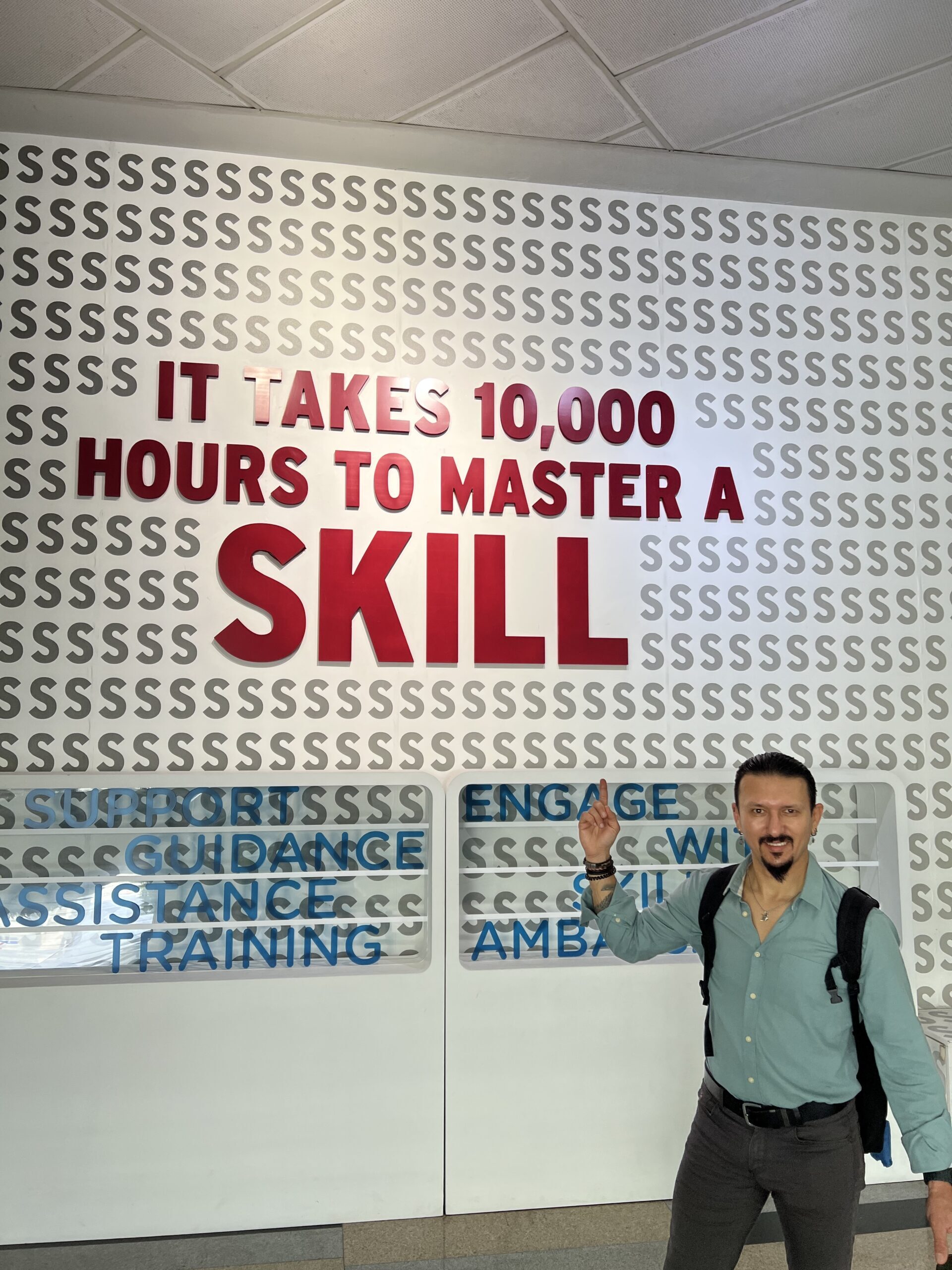
Does It Take 10,000 Hours to Master a Skill?

It does—or at least that much time to fully digest the internals of what you’re working on. Whether it’s 10,000 hours, nautical miles, or kilometers, the exact metric doesn’t matter. What does matter is the time spent developing tribal knowledge—understanding shortfalls, known issues, edge cases, strengths, and weaknesses.

Along the way, we all make mistakes. We think we’ve learned our lessons, but the reality is that learning never stops. The most important lesson I’ve learned? Never give up. The moment you step back and quit, you risk an epic failure—one that may come at a cost you can’t afford. Persistence is everything.

As I mark this 30-year milestone, I remain committed to the tech community—mentoring, coaching, and pushing the boundaries of what’s possible with open-source databases. Here’s to the next chapter and many more years of learning, teaching, and growing together.