Tag Archives: coaching

Navigating Business Challenges: Insights from Sailing

Some experiences can be simulated.

Sailing cannot, and it ever changes.

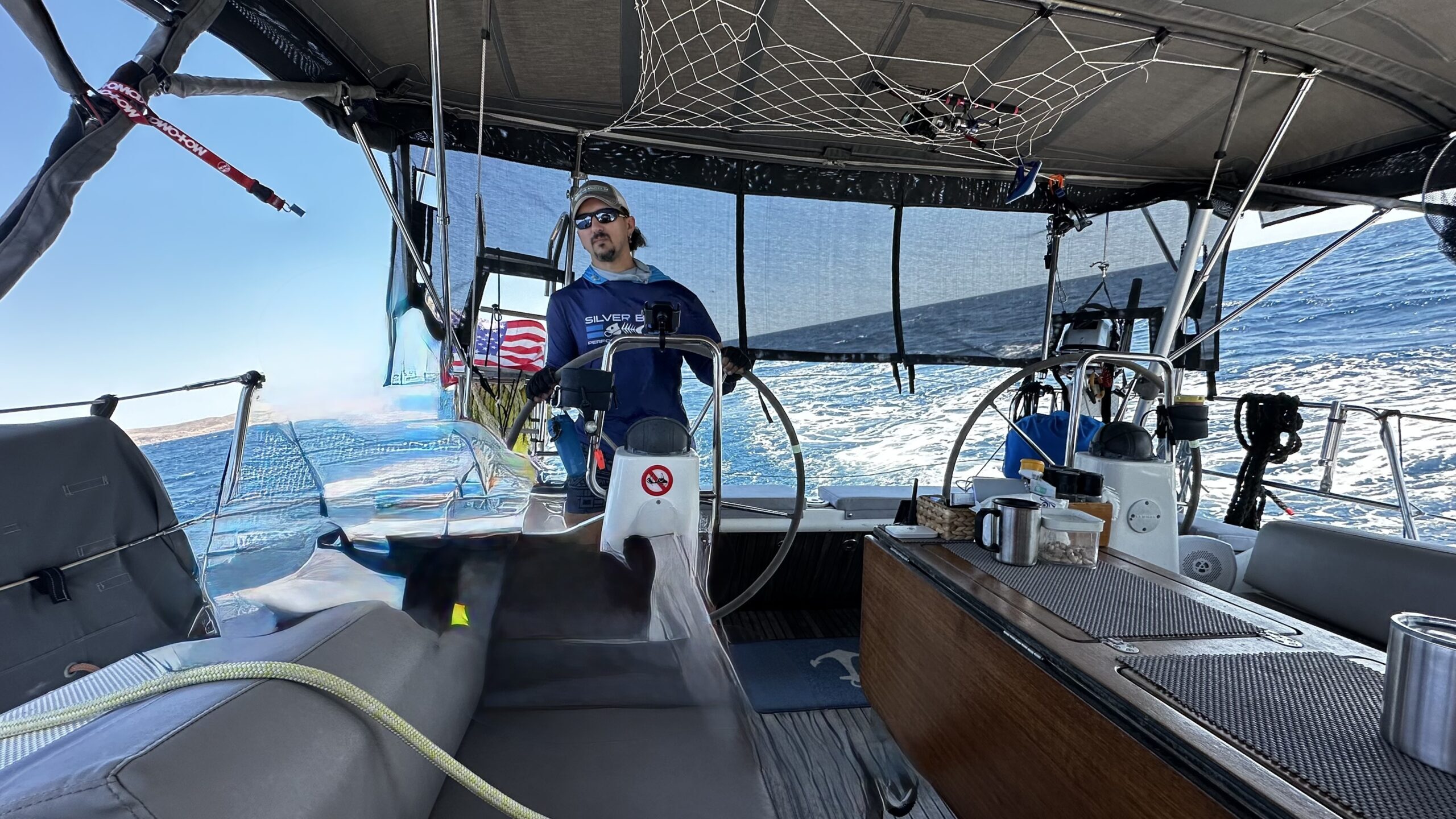
At first glance, a sailboat feels like leisure, wind, sea, and escape from reality. But the moment you take responsibility on board, that illusion disappears.

A sailboat is not an escape from life. It is a lifestyle full of responsibilities.

As we enter the sailing season, I wanted to take a few notes on how sailing aligns with the business life we live every day.

A Boat Is an Organization

A sailboat is, in essence, a fully functioning micro-organization.

  • The wind represents external market forces, unpredictable, uncontrollable, yet decisive.
  • The route is your strategy, chosen deliberately, but constantly under pressure to adapt.
  • The crew is your organization, each role critical, each mistake amplified.
  • The captain embodies leadership, not authority, but responsibility.

Unlike corporate environments, where feedback loops are often delayed or diluted, sailing delivers immediate and unambiguous consequences. A poor decision is not debated; it is felt. Instantly, no regrets, only lessons learned.

Reality Has No Buffer

At sea, there is no delay.
In most environments, reality is delayed through reports, meetings, and layers of interpretation. At sea, there is no such delay. If you are wrong, the boat tells you immediately. If communication fails, the system breaks immediately. There are no explanations, only outcomes.

If you’re wrong, the boat tells you immediately. If communication fails, the system breaks immediately.

No explanations. Just outcomes.

Leadership Is Behavior

On land, leadership can hide behind structure. At sea, it can’t. I sometimes say me, myself, and I, even though I have a crew with me.

I often just smile and don’t say anything.

There are no layers, no escalation paths, no time to reframe the narrative. Sometimes, the best and life-saving advice is to gear up with your life jacket if you haven’t already.

Only:

  • What you see and its relevance to your experience.
  • What you decide. There’s no right or wrong at sea. What you decide is what you’ll have to face.
  • What you communicate. There are a lot of assumptions; avoid them. Be clear and concise.

Teamwork Is Binary

Collaboration is not a “nice to have”; it either works or it doesn’t.

A maneuver with:

  • Slight hesitation
  • Unclear communication
  • Assumptions instead of alignment

will have consequences.

Nothing else can be more harmful than a precise decision.

Adapt or Stall

Plans don’t survive contact with reality. Wind shifts. Conditions change severely. You don’t debate it.

You adapt conditions continuously.

The Hidden Lesson

After a few hours, something shifts in people.

Less talking.

More observing.

Clearer communication.

Because reality leaves no room for ego.

Why It Matters

Sailing compresses how real systems behave:

  • Immediate feedback
  • Clear cause and effect
  • Shared exposure

It teaches what most environments dilute:

  • Decision-making
  • Communication
  • Accountability
  • Adaptation

But more than anything, it gives you something rare:

Final Thought

A sailboat is one of the few environments where there is no AI involved.

Only human, trained coordination.

That is exactly why it works.

Not as an escape, but as a mirror of how we actually operate under pressure.

Follow the adventure at @svrubato
Why successful people should be mentored?


Not knowing whether you need a mentor or not at the beginning.

People often assume that mentorship is something you outgrow. They imagine it as a ladder. It’s something you climb early in your career. Once you reach a certain level of success, you step off and stand on your own.

In reality, the opposite is true. The higher you go, the more critical mentorship becomes. I’ve learned this repeatedly throughout my career in open source, in leadership, and in life.


Success Doesn’t Eliminate Blind Spots

When you achieve success, you start to hear less honest feedback. People around you become careful with their words. Colleagues hesitate to challenge your ideas. Slowly, your perspective narrows. It happens not out of arrogance. It’s hard to see what no one reflects back at you.

That’s where a mentor makes all the difference. A good mentor isn’t impressed by your title or your achievements. They see you as the person behind the professional identity. They’ll challenge your assumptions and remind you that growth never stops, no matter how far you’ve come.


Learning Never Ends

The world around us moves too fast for anyone to claim mastery. Technologies evolve, leadership philosophies change, and the definition of success itself shifts over time.

Mentorship keeps you learning. It introduces you to new ways of thinking, new perspectives, and new generations. It forces you to stay curious, and curiosity is what keeps leaders relevant.

In my years working with global database communities, I’ve seen brilliant engineers become stagnant simply because they stopped seeking input. The best ones? They’re still asking questions, still open to being mentored.


Every Step Forward Is New Territory

No matter how experienced you are, every stage of career growth is unexplored terrain. Each new role, responsibility, or challenge introduces conditions you’ve never faced. There are new dynamics, new expectations, and sometimes, new vulnerabilities.

Mentors are the ones who’ve walked those paths already. They know where the turns are, where you stumble, and how to prepare for what’s coming next. They help you see beyond the horizon of your current comfort zone.

That foresight is the ability to anticipate the next chapter of your journey. It is one of the most valuable gifts mentorship offers. It opens your mind to possibilities you have never considered. It helps you approach the unknown with clarity rather than fear.


The Lonely Space at the Top

Leadership is often described as empowering, and it is, but it’s also lonely. You carry responsibilities that few others truly understand. You can’t always be vulnerable with your team or share the full weight of the decisions you make.

Having a mentor gives you a space to breathe. Someone who listens without judging, who helps you find balance when everything feels heavy. Sometimes, mentorship isn’t about advice at all. It’s about presence and perspective. It’s about being reminded that you’re not alone in figuring it out.


From Achievement to Legacy

There’s a point where success stops being about how much you achieve and starts being about what you enable. Mentorship helps you make that shift.

It turns experience into impact. It teaches you how to guide others. It shows you how to pass on lessons without ego. You learn how to translate hard-earned wisdom into something that outlives your career. Every time I’ve been mentored, I’ve become a better mentor myself. I think that is the real cycle of growth.


The Real Value of Mentorship

I’ve come to see mentorship not as a career stage, but as a lifelong relationship with learning. It keeps you honest. It keeps you grounded. And it ensures that success doesn’t harden into comfort.

If anything, mentorship is a mirror. It helps you stay true to your principles. It also connects you to your evolution and your humanity.

No matter how much experience I gain, I’ll always seek mentors. Because the moment I stop learning from others is the moment I stop growing.

This is why I still believe in mentorship even after a successful career. In conclusion, have I had a dedicated mentor in my career? The short answer is no, but I’ve had role models along the way. I’ve used them as my mentors and always asked them what would I do if I were them.


Book Recommendation: https://a.co/d/hc6f6le

How it's going?

30th Anniversary Edition

In this edition of the blog post, I want to summarize my three decades (excluding my internships) of hustle in Information Technology. This is not only a tribute to my 30th anniversary in the field but also a show of appreciation for those with whom I’ve crossed paths—sharing knowledge, experiences, and moments of blood, sweat, and tears. Through this journey, I have worked to become a humble, smart, and resourceful person. I will continue to mentor and coach, share what I’ve learned, and help others achieve even greater success.

The majority of my background has been as a Database Administrator (DBA), although my academic foundation was in Electronics in high school and Software Development in college. As my career progressed, I naturally gravitated toward data management, making databases my core focus.

From the early days of navigating the evolving landscape of databases and technology to leading global teams and contributing to the open-source community, every challenge and milestone has shaped me. Along the way, I’ve had the privilege of working with brilliant minds, tackling complex problems, and building solutions that have left a lasting impact.

Of course, the databases I’ve worked with have also connected me with their respective communities. In the early days, enterprise communities were tightly controlled—corporations dictated what could and couldn’t be shared. A decade ago, we started seeing individuals clarify that their views on social media were their own and not their employer’s. Back then, when working on a project, we operated in silence—no open discussions, no forums, just internal tickets to the database provider if an issue arose. I also predate the internet, social media, and the niche forums we have today, which has given me a unique perspective on how knowledge sharing has evolved.

My journey began as a Technical Support Engineer for Informix (acquired by IBM in 2000). From there, I transitioned into full-time DBA roles across various companies—both as a consultant and a full-time employee. There are too many to list, but the key takeaway is that technology forces adaptation. As Informix declined in popularity, I shifted to Oracle and SQL Server, which dominated most of my career until I transitioned to full-scale MySQL administration. That’s where real community engagement started (link).

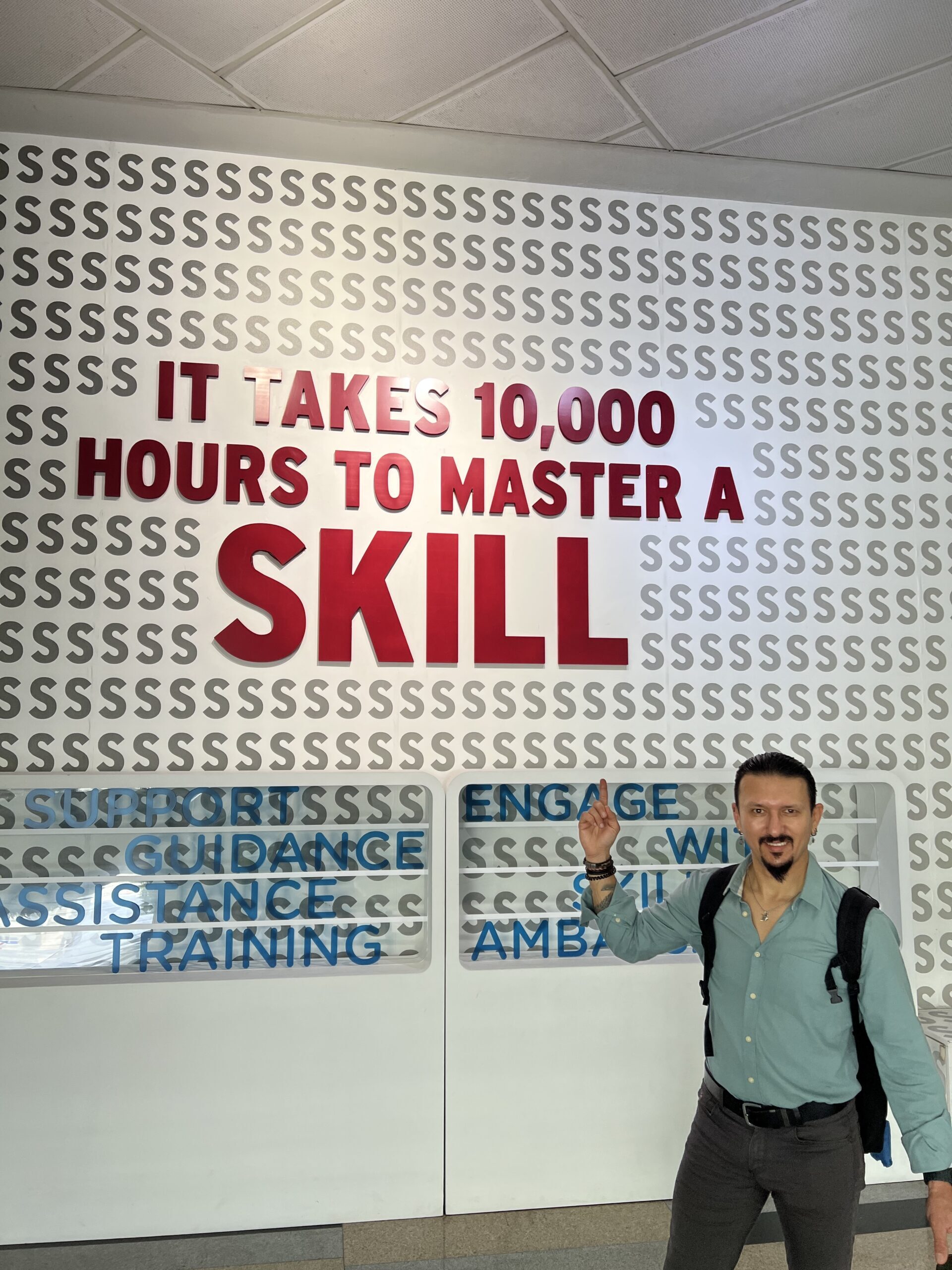
Does It Take 10,000 Hours to Master a Skill?

It does—or at least that much time to fully digest the internals of what you’re working on. Whether it’s 10,000 hours, nautical miles, or kilometers, the exact metric doesn’t matter. What does matter is the time spent developing tribal knowledge—understanding shortfalls, known issues, edge cases, strengths, and weaknesses.

Along the way, we all make mistakes. We think we’ve learned our lessons, but the reality is that learning never stops. The most important lesson I’ve learned? Never give up. The moment you step back and quit, you risk an epic failure—one that may come at a cost you can’t afford. Persistence is everything.

As I mark this 30-year milestone, I remain committed to the tech community—mentoring, coaching, and pushing the boundaries of what’s possible with open-source databases. Here’s to the next chapter and many more years of learning, teaching, and growing together.

MySQL Cookbook 4th Edition

A nomadic sailing dream that turns into book authoring and a new role…

The inception of the book

I want to start with a huge thank you to Sveta for her invitation to her engagement with O’Reilly as a previous author. Although I had mentioned that I had an inspiration to author a book and attempted to release a booklet in the past, this was somewhat unexpected in the midst of my first biggest pandemic. 

Unexpected and surprising developments

Let’s go back in time to the infamous covid-19 pandemic. We have been under pressure with the unknown virus with little or no hope of recovery anytime soon. I got an alert from one of the brokers about a sailboat I was interested in. After a few minutes of checking with my long-time friend Nurhan, I decide to make an offer. Unfortunately, our discussions didn’t go that smoothly, and I was informed that the boat was already sold to another buyer. I insisted on increasing the price and changing the wind direction to my side by writing a moral story to the broker, and he accepted it. Now, no flights were allowed during a total lockdown. 

The rest of the story is here

After three weeks of getting a special business permit, we landed in Zagreb, Croatia, and completed our purchase. The paperwork took about another three weeks to complete. That’s when I got the ping from Sveta about the possible authoring of a book. At the time, I worked at Percona as Sr. Technical Manager at the same company as Sveta. Strangely, I had an offer from another company within the same week. So I accepted to join PlanetScale as part of the Vitess Open Source project role. So now I have a boat to bring home, a new job to sign in, and a book to author. 

O’Reilly Experience

I had no prior experience authoring a technical book or working with a professional editor. The company has proven to be one of the best in the industry, working with the brightest minds and publishing hundreds of books annually. Here comes Sveta again for help while I’m planning a long pandemic-bound sailing journey and a new job with many unknowns. 

The MySQL Cookbook was initially authored by Paul DuBois and released three times. So it had massive content, and I had not gone through it in detail. Looking at the overall chapters and fast reading in 48 hours, I have decided to accept to co-author 4th release of the book. The original agreement was to update %60 of the content of the last edition. Since a significant time passed and MySQL advanced to hole new levels with MySQL 8 altering for new release would merely touch every part of the book. Not only MySQL itself, but there were also new programming languages to be added, and deprecated code had to be removed. 

Developments in making

Discussions and agreements were made based mainly on Sveta’s input on all the chapters, and I was mostly monitoring how this book could be turned into a new release. Besides the technical content and programming languages used, there was another challenge to the authors about the platform. 

It’s not a simple Word document or gdoc that had to be used, but DocBook and XML had to be mastered. After two years, I still lack the skill to do both. 

The process of authoring new chapters was more effective than rewriting or editing existing chapters. For example, the book used a different data set throughout the chapters, and we decided to change that. Finding a sample data set that is freely available and suitable for the entire book is difficult. So we had to go to multiple sources. 

The older chapters also had a lot of deprecated values and updates, which changed the storyline of the content. To fix those, we had to rewrite most of the chapters and revisit them repeatedly to ensure referenced content was not missing from other chapters. 

Key Takeaways 

Before agreeing to author a book, talk to other authors about the time and material, it takes for the type of book you are getting in. This will allow better planning of your work/life/book balance hence avoiding burnout. 

Once agreement is made, research the platform you will be responsible for authoring and training yourself—for example, Gitlab, DocBook, XML, etc. 

Take advice on how to plan or co-author the parts you’ll be responsible for. Record all agreements you made to keep track of the progress. Take everything very seriously and ensure it does not impact your other responsibilities. 

Be well organized in your time and planning. What times and which days you’ll be spending time on the book where? Create a cadence around this dedicated time, and it’s no different than finishing a degree. 

Allow extra time to deliver sections you’re involved in, as there’s a deep feedback circle. If you are authoring alone, this time will be reduced, but you’ll get feedback later in the process. If you are co-authoring, every chapter you’ve split will have to be reviewed before the first editorial. After the initial review, you’ll get feedback to clarify, modify, remove and rewrite multiple times. Some sections go into an endless feedback loop for a very long time. You’ll receive at least four to six technical people’s feedback later in the process and additional editorial feedback. So expect to return to a section or chapter you were involved in a year ago. 

Last but not least, do never over-commit yourself. This will decrease your productivity and lower the quality of the output. Timing is essential to fulfilling this lifelong dream of being an author. Some do it earlier in their career maybe a better result for authoring other books.  

I want to thank my wife, Aslihan, and my daughters, Ilayda and Lara, for their patience and support when I needed to focus and use family time to write this book.

Many thanks to my colleagues and team at PlanetScale, especially Deepthi Sigireddi, for her extra care and support. Special thanks go to the MySQL community, friends, and family members.

I also want to take a moment to thank Sveta Smirnova for her endless support while coaching me throughout my first book journey.

You can read the book here,

Thank you

Where did I start reading?

In this blog post, I’m going to try to cover my reading initiative. As you already know one of the difficult tasks in professional life is to find a balance to enhance or develop new skills. In today’s world, we’re lucky to reach all the information we need to get better at things we do. Several of those include learning new things, doing things more efficiently and finding the balance between work and life.

I get a lot of questions on the reading list that I had. When I started my own approach I really had no guidance. There were few recommendations but they were all related to the specific subject not broader plan that I could use. So I started my own learning program to learn how to read first.

I’ve given advice, list of books and often times examples from the books or digest of ideas from many books I’ve read. I don’t think I’ve read enough books yet but if someone tells you they’ve speed read a book in a week and they can repeat that for weeks maybe in months, please don’t take that as an example. It’s really not recommended.

In my opinion, a good book should be:

  • Relevant to what you are trying to achieve in life.
  • Easy to follow and understand clearly.
  • Interesting and intriguing to your objectives.

Until and after you read a book, you will not know if the above is true. It’s also true that I’ve had a few disappointments myself due to different factors.

Where did I start to learn what books to read?

I can only think of one book straight out and recommend a great book by Marshall Goldsmith, What Got You Here Won’t Get You There: How Successful People Become Even More Successful . This book was not only a great beginner’s book, it was also exactly the purpose of the situation I was in. Interestingly enough, the order of the book that you will be reading will define the path you may follow. So I think this is the reason behind this blog post. I’ve had another adventure on Brain Rules. Not that it’s a wrong book or anything timing was not right. After reading several leadership books, you can easily find most information references what’s in this book. Both books are great and had me find my real journey to the rest of the grand plan.

I’ve continued with The Personal MBA. This book not only talks about what you’ve been doing wrong all along also comes with The 99 Best Business Books list. Basically, after subscribing Josh Kaufman’s email newsletter you get an email with this comprehensive list of books to read. Before moving on anything on this massive list grouped by different business subjects it’s wise to read his second book advised. The First 20 Hours: How to Learn Anything . . . Fast! 

Once you start with the above information, you will have a pretty good idea to pursue to focus on what you want to achieve.

Here’s a list of the top 10 books that had an impact on my business life:

  1. The 80/20 Principle: The Secret to Achieving More with Less
  2. The 7 Habits of Highly Effective People: Powerful Lessons in Personal Change
  3. Extreme Ownership: How U.S. Navy SEALs Lead and Win
  4. Pitch Anything: An Innovative Method for Presenting, Persuading, and Winning the Deal
  5. Talk Like TED: The 9 Public-Speaking Secrets of the World’s Top Minds
  6. The Ideal Team Player: How to Recognize and Cultivate The Three Essential Virtues
  7. Firms of Endearment: How World-Class Companies Profit from Passion and Purpose
  8. The Power of Habit: Why We Do What We Do in Life and Business
  9. Delivering Happiness: A Path to Profits, Passion, and Purpose
  10. Leadership and Self-Deception: Getting Out of the Box

The order may vary by purpose and person. Again remember the idea is to figure out what’s out there and focus on purpose. This is not the full list of books I can recommend rather a give you guidance.

If you are a slow reader, maybe start with this 10 Days to Faster Reading: Jump-Start Your Reading Skills with Speed reading. I prefer Audible – Audiobooks & Podcasts. Audible mobile apps allow offline versions of audiobooks, which are perfect for long flights without the internet. Audible is also a space saver during travel due to baggage limits. I carry all my technical books in a cloud drive where I can pull offline if needed. So Audible solves this problem by bringing non-technical books to my iPad/iPhone. Cloud sync also allows devices to remember where you left off.

At the time of writing this blog post, I’ve been reading Business Model You: A One-Page Method For Reinventing Your Career and was pretty impressed by its content. In conclusion, reading self-development books is helpful in business and personal life but not enough. Eat healthy, exercise, and enjoy work-life balance to achieve greater success.